For brands investing heavily in design and innovation, nothing is more terrifying than discovering a counterfeit version of your product hitting the market before your official launch. When sourcing custom bags or shoes overseas, safeguarding your commercial secrets is not an option; it is an absolute necessity. However, a common myth is that protecting your designs in Asia is impossible. The reality is that China has a robust legal framework—if you know how to use it. This comprehensive guide will demystify IP protection in China, explaining everything from trademark rules to structuring a bulletproof OEM agreement, ensuring your brand remains exclusively yours.
The Golden Rule: China’s “First-to-File” Trademark System
The most critical mistake foreign brands make is assuming their domestic trademark protects them globally. It does not.
Why You Must Register Your Brand in China (Even for Export Only)
China operates on a “First-to-File” trademark system. This means whoever registers the trademark first legally owns it in China, regardless of who used it first globally. Even if you only intend to manufacture your custom sneakers in China and sell them in Europe, you must register your trademark in China. If someone else registers it, Chinese customs can legally seize your goods as “counterfeits” when you try to export them.
The Risks of Trademark Squatting
Trademark squatting happens when “bad faith” actors register famous or emerging foreign brand names in China with the sole intention of selling the trademark back to the rightful owner at an exorbitant ransom. Registering your trademark in China early—before you even start contacting factories—is your cheapest and most effective insurance policy.
NNN Agreements vs. Standard NDAs: What You Need to Know
Before you send your highly sensitive Tech Packs or 3D shoe models to a potential factory, you need legal protection. But a standard Non-Disclosure Agreement (NDA) downloaded from the internet won’t cut it.
Why a Western NDA is Often Unenforceable in China
A standard Western NDA usually focuses on protecting trade secrets and is often governed by US or EU laws. If a Chinese factory breaches a US-governed NDA, enforcing that judgment in a Chinese court is exceptionally difficult, time-consuming, and expensive. It lacks “teeth.”
The Power of Non-Disclosure, Non-Use, and Non-Circumvention (NNN)
When practicing IP protection in China, you need an NNN Agreement. Drafted by a lawyer versed in Chinese law, it covers three crucial pillars:
- Non-Disclosure: The factory cannot share your designs with third parties.
- Non-Use: The factory cannot use your designs or molds to manufacture products for themselves or their other clients.
- Non-Circumvention: The factory cannot bypass you to sell directly to your customers or distributors at a lower price.
Structuring Your OEM Agreement for Maximum Protection
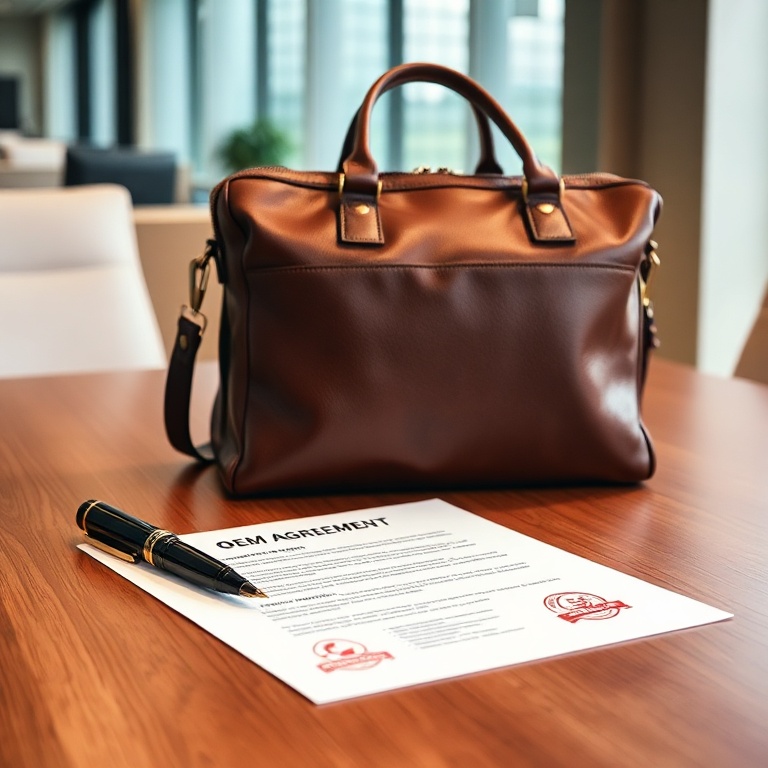
Once you have selected a factory, the actual manufacturing contract (the OEM agreement) is your final legal shield. It must be detailed and specific.
Defining Ownership of Custom Molds and Tooling
Shoe manufacturing often requires expensive custom outsoles. Your OEM contract must explicitly state that since you paid the tooling fees, you own the physical molds and the design rights to them. It should outline how and when the molds must be returned to you if the business relationship ends.
Setting Strict Rules Against Unauthorized Subcontracting
Sometimes, a factory might quietly subcontract part of your order to a smaller, unregulated workshop to save money or meet deadlines. This is a massive IP and quality risk. Your contract must forbid unauthorized subcontracting, ensuring your designs stay within the vetted facility.
Defect Clauses: What Happens to Rejected Products?
What happens to the bags or shoes that fail your quality control inspection? Unscrupulous factories might sell these “seconds” on the gray market, cheapening your brand. Your OEM agreement must dictate that all rejected items featuring your logo must be entirely destroyed or strictly modified so they cannot be sold.
Beyond Contracts: Partnering with a Respectable Manufacturer
Legal contracts are your safety net, but a lawsuit is a situation you ideally want to avoid altogether. The truest form of protection is aligning yourself with an ethical business.
Why Factory Vetting is Your First Line of Defense
A contract is only as good as the company signing it. When evaluating a supplier, look for a long track record, transparent communication, and a willingness to sign NNN agreements. Factories that heavily invest in long-term B2B relationships rely on their reputation; they have more to lose by stealing your design than they would gain.
How BMLineColl Safeguards Your Custom Bag and Shoe Designs
With 18 years of export history, we understand that trust is our core product. We routinely sign and strictly adhere to client-provided NNN agreements. Our internal protocols ensure your Tech Packs, physical samples, and custom molds are handled with the utmost confidentiality. Choosing areputable OEM manufacturing partner is the smartest IP strategy you can deploy.
Proactive IP Strategy is the Foundation of Global Growth
Protecting your intellectual property should not be an afterthought; it must be step one of your sourcing journey. By understanding the “First-to-File” rule, utilizing localized NNN agreements, and drafting stringent OEM contracts, you secure your brand’s future. When combined with a trustworthy manufacturing partner, you can innovate fearlessly.
Ready to bring your proprietary designs to life without the worry of IP theft? Discuss your secure manufacturing project with our team and experience a partnership built on absolute integrity.
Frequently Asked Questions About IP Protection in China
Who owns the intellectual property in an ODM partnership?
Who owns the IP in an ODM partnership? In an ODM (Original Design Manufacturer) model, the factory created the base design, so they own the structural intellectual property. However, you own the trademark/logo you place on it. You cannot stop the factory from selling the blank design to others, but they cannot sell it with your branding.
Can I trust a manufacturer without signing an NNN agreement first?
Can I trust a factory without an NNN? While many reputable factories will not steal your design, relying purely on trust is a massive business risk. A professional factory will never hesitate or be offended when asked to sign a well-drafted NNN agreement before reviewing your proprietary designs.
Does a patent in my home country protect my design in China?
Does my home country patent protect me in China? No. Patents, like trademarks, are territorial. A US design patent offers no legal protection against a factory manufacturing that same design in China. You must file for a corresponding patent in China (usually a Design Patent or Utility Model Patent) to secure legal protection there.