When developing a new shoe line, designers naturally obsess over the upper materials, the sleek silhouette, and the outsole’s grip. However, there is one hidden component that has a disproportionate impact on whether a customer keeps the shoe or returns it: the insole. Upgrading to premium custom insoles is one of the most cost-effective strategies to drastically elevate your product’s perceived value and overall shoe comfort. This comprehensive guide explores the materials, advanced technologies, and branding opportunities available to ensure your footwear leaves a lasting, comfortable impression. Discover how we can upgrade your shoe components today.
The Hidden Value of Custom Insoles in Shoe Manufacturing
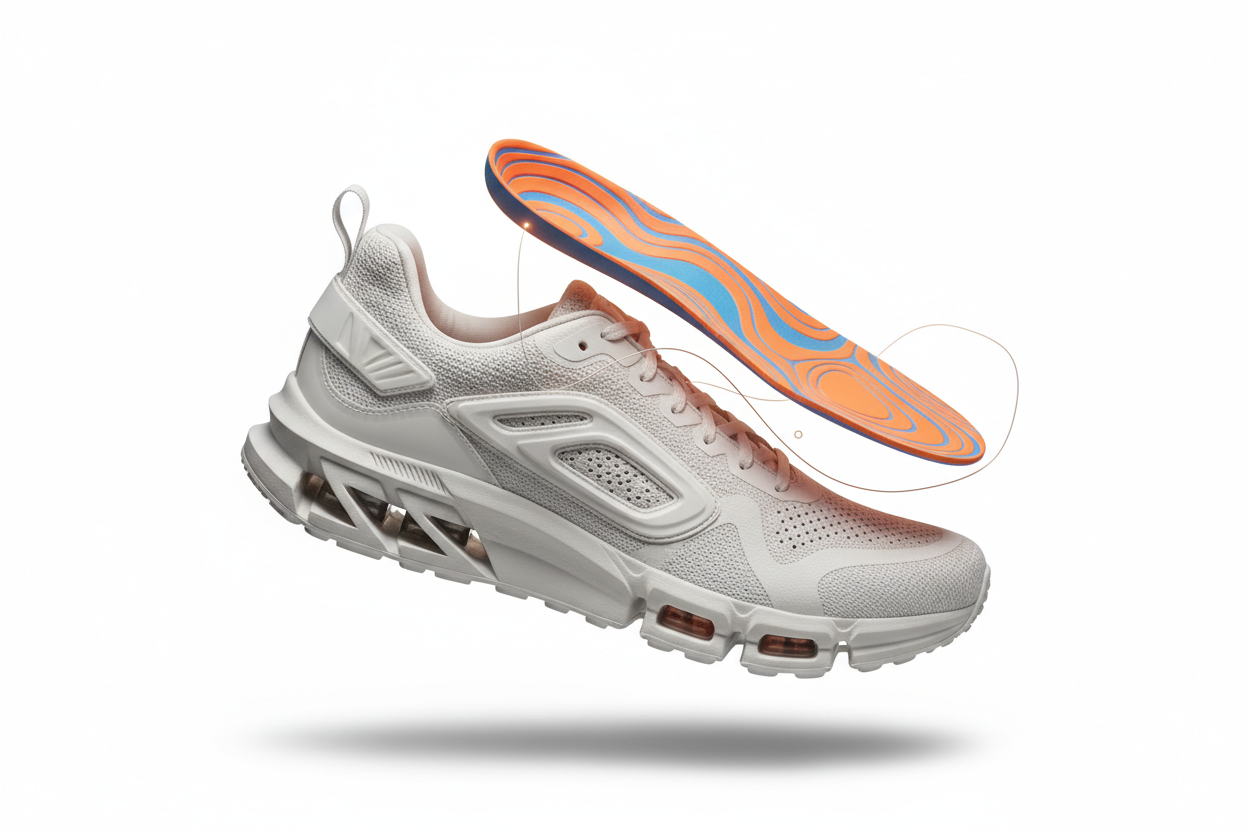
An insole is much more than a piece of foam covering the strobel board. It is the primary, intimate interface between your customer and your product.
Why the “First Step” Experience Dictates Customer Retention
In the retail and e-commerce world, the “first step” effect is undeniably real. When a customer tries on a shoe, their brain makes a definitive comfort judgment within the first three seconds. If the footbed feels hard, flat, or unsupportive, the shoe goes straight back into the box. High-quality custom insoles provide immediate, plush feedback. Securing that critical first impression is the ultimate key to boosting customer retention and reducing costly return rates.
Using Insoles as a Powerful Tool for Product Differentiation
In a crowded footwear market, how does your sneaker stand out from a visually similar competitor? The answer often lies hidden inside. By engineering and marketing a specialized, high-comfort insole, you create tangible product differentiation. This internal upgrade justifies a premium retail price point and builds fierce, long-lasting brand loyalty.
A Guide to Insole Materials: Finding the Perfect Match
Not all insoles are created equal. The foundation of any exceptional insole is its base material. Here are the most common options utilized in professional shoe manufacturing.
EVA (Ethylene-Vinyl Acetate): The Lightweight and Cost-Effective Standard
EVA is the undisputed industry standard for basic insoles. It is extremely lightweight, flexible, and highly cost-effective. While excellent for budget-friendly lines or casual everyday wear, standard EVA tends to compress and lose its supportive bounce over extended periods of time.
PU (Polyurethane): The Choice for Durable, High-Density Support
PU is significantly denser and heavier than EVA, offering far superior durability and shock absorption. PU insoles retain their precise shape and cushioning properties for a much longer lifespan. This makes them the perfect choice for heavy-duty work boots, rugged hiking shoes, or premium athletic sneakers.
Cork: The Eco-Friendly Option for Natural Arch Support
Cork is a highly sustainable, natural material that gradually molds to the wearer’s exact foot shape over time, providing incredible custom arch support. It is naturally moisture-wicking and odor-resistant, making it a favorite for high-end lifestyle shoes and premium sandals.
The Comfort Titans: OrthoLite® vs. Memory Foam
When footwear brands want to aggressively market “premium comfort,” the conversation inevitably comes down to two heavyweights in the industry.
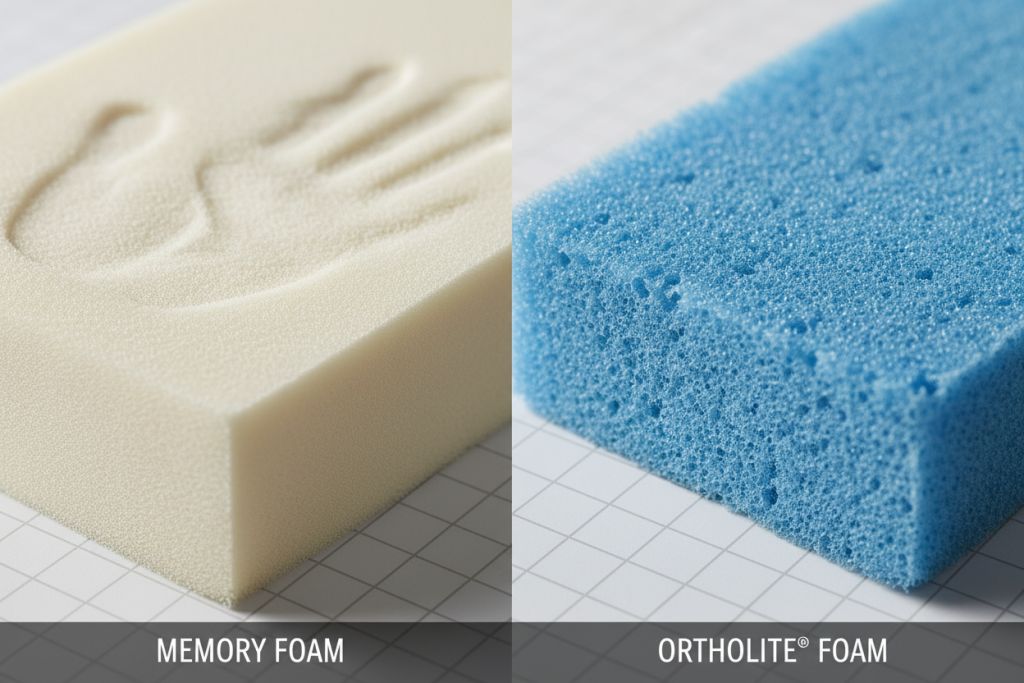
What Makes Memory Foam the King of Plush, Adaptive Fit?
Memory Foam is world-famous for its luxurious, “sink-in” feel. It actively reacts to body heat and pressure, molding perfectly to the exact contours of the foot. This provides unparalleled, customized pressure relief. However, traditional memory foam can retain heat and compress permanently under heavy athletic use, making it better suited for casual walking shoes.
Exploring OrthoLite®: Breathability and Long-Lasting Rebound Explained
OrthoLite is a proprietary, advanced open-cell polyurethane foam. Unlike dense memory foam, its open-cell structure allows air to circulate freely, keeping the foot significantly cooler and drier. Furthermore, OrthoLite retains over 95% of its thickness over time, ensuring long-lasting rebound, breathability, and consistent cushioning.
Which One is Right for Your Custom Sneakers?
If you are designing cozy winter boots, comfortable house slippers, or casual walking shoes where an instant “cloud-like” sensation is desired, Memory Foam is excellent. If you are developing high-performance athletic shoes, running shoes, or premium custom sneakers where maximum breathability and long-term durability are required, OrthoLite (or a similar high-rebound open-cell foam) is undeniably the superior choice.
Customizing the Insole: Branding and Functional Upgrades
Beyond the base foam itself, the insole serves as a blank canvas for your brand identity and specific functional engineering needs.
Visual Branding: Logo Embossing and Top Cloth Printing
Every single time a customer takes off their shoes, they should be reminded of your brand. We offer high-quality logo embossing pressed directly into the foam heel, or crisp, vibrant screen printing on the top cloth. This subliminal, repeated branding reinforces premium quality.
Functional Additions: Metatarsal Pads and Heel Cups
For brands focusing heavily on ergonomics and foot health, we can engineer insoles with deep heel cups to aggressively stabilize the foot, or raised metatarsal pads to relieve forefoot pressure. These orthopedic additions instantly turn a standard shoe into a highly specialized comfort product.
Selecting the Right Top Fabric for Moisture-Wicking
The top cloth (the fabric physically touching the wearer’s sock) matters immensely. We can easily source antimicrobial, moisture-wicking fabrics that actively keep feet dry and fight odor-causing bacteria. This is an absolutely essential upgrade for any athletic and outdoor footwear line.
Seamless Integration with Your OEM Shoe Factory
A fantastic insole is completely useless if it does not fit the shoe properly. This is why tight manufacturing integration is vital.
Matching the Insole Profile to the Shoe Last
The custom insole must be precisely die-cut or molded to match the exact shoe last (the physical 3D foot model used to build the shoe’s structure). If the insole is cut too wide, it wrinkles uncomfortably; if cut too narrow, it slips during walking. As your dedicated manufacturing partner, we ensure absolute dimensional harmony.
How We Engineer Maximum Comfort for Your Footwear Line
At BMLineColl, we never treat insoles as an afterthought. Our experienced R&D team works closely with you to select the perfect foam density, top cloth material, and branding execution to flawlessly complement your specific footwear design.Let’s engineer maximum comfort for your next collection.
Don’t Let a Cheap Insole Compromise a Great Shoe Design
You have undoubtedly invested heavily in beautiful upper designs, marketing, and durable outsoles. Do not cut corners on the single component the customer actually feels the most. Upgrading to premium custom insoles is a relatively minor manufacturing cost that yields a massive, immediate return in customer satisfaction, dramatically lower return rates, and elevated brand prestige.
Are you ready to step up your footwear game from the inside out? Speak with our product development experts today to explore our premium insole manufacturing solutions.
Frequently Asked Questions About Shoe Insole Manufacturing
Does customizing the insole significantly increase the manufacturing cost?
Does customizing the insole significantly increase the cost? Simply changing the color of the top fabric or adding a printed logo adds very little to the base cost. Upgrading the core base material (e.g., switching from basic EVA to premium OrthoLite) or requiring custom molded shapes with specialized arch support will increase the unit price. However, this investment is usually easily recovered through a much higher retail price point and fewer returns.
Can I use different insoles for different models in my collection?
Can I use different insoles for different models? Yes, absolutely. Many successful brands use standard EVA insoles for their entry-level lifestyle shoes, and reserve premium PU or OrthoLite insoles for their flagship athletic or “Pro” tier models. We can easily manage these material variations within your bulk production runs.
What is the typical MOQ for custom branded insoles?
What is the typical MOQ for custom branded insoles? If you are ordering complete, fully assembled shoes from us, the custom insole MOQ simply matches the overall shoe MOQ (which is typically 800 to 1000 pairs per style). We handle the custom insole production seamlessly as part of your overall OEM footwear manufacturing package.