When a backpack fails, it’s rarely the fabric that rips in the middle of a panel. It’s almost always a strap tearing away from the body or a zipper blowing out under tension. For brands in the outdoor, tactical, or tool industries, these failures are unacceptable. They damage your reputation and lead to costly returns. The secret to a truly durable backpack isn’t just in the material you see; it’s in the engineering you don’t. This guide takes you behind the seams to explore the reinforcement techniques and bag manufacturing process that separate a “use-once” bag from a “use-forever” companion. Build your heavy-duty gear with us.
The Unsung Hero: Why Thread Choice Matters First
Before we talk about stitching patterns, we must talk about the thread itself. Using a weak thread on a strong fabric is like building a brick wall with weak mortar.
Cotton vs. Bonded Nylon: Selecting High-Tensile Threads
In heavy-duty manufacturing, cotton thread has no place. We exclusively use bonded nylon or continuous filament polyester threads. These materials have high tensile strength, resist rotting and mildew, and can withstand the friction of high-speed industrial sewing machines without breaking.
Matching Thread Thickness (Denier) to Fabric Weight
Durability requires balance. We carefully match the thread thickness (often measured in Tex or Denier) to the fabric weight. A heavy 1000D Cordura requires a thicker, stronger thread (like Tex 70 or Tex 90) to ensure the seam is as strong as the panel it connects.
Bartacking: The Heavy Lifter of Bag Construction
If you look closely at the stress points of a quality bag, you’ll see a dense series of zigzag stitches. This is a bartack, and it is the single most important reinforcement technique.
What is a Bartack and How Does it Work?
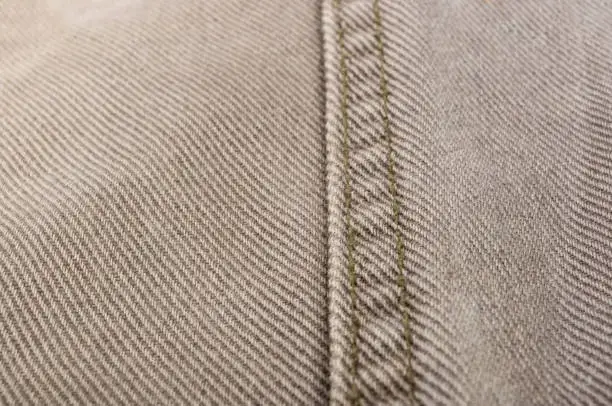
Bartacking is a specialized machine operation that sews a very tight zigzag pattern back and forth over a short length (usually 1-2 cm). This creates a solid “bar” of thread that distributes stress across a wider area, preventing the fabric from tearing at a single needle hole.
Critical Placement: Zipper Ends, Pockets, and Molle Webbing
We place bartacks wherever tension is concentrated: at the ends of zippers (to stop the slider from flying off), at the corners of pockets, and at every division of Molle webbing on tactical bags.
Why Bartacks are Superior to Standard Back-Stitching
A standard back-stitch (sewing forward and backward) adds some strength, but it adds bulk and can perforate the fabric too many times in one line. A bartack is engineered specifically for load-bearing and is exponentially stronger.
Structural Integrity: Double Stitching and Bias Binding
Reinforcement isn’t just about specific points; it’s about the entire structural integrity of the bag’s assembly.
Double Stitching Seams for Fail-Safe Protection
For main structural seams, a single row of stitching is a risk. We employ double stitching—two parallel rows of stitches. If one row fails due to abrasion or accidental cutting, the second row holds the bag together, preventing catastrophic failure in the field.
Internal Binding: Protecting Raw Edges from Fraying
Inside the bag, raw fabric edges are covered with binding tape (bias binding). This isn’t just for looks; it prevents the fabric weave from unraveling over time, which would eventually cause the seam to fall apart from the inside out.
The “Box X” Stitch: Anchoring Handles and Straps
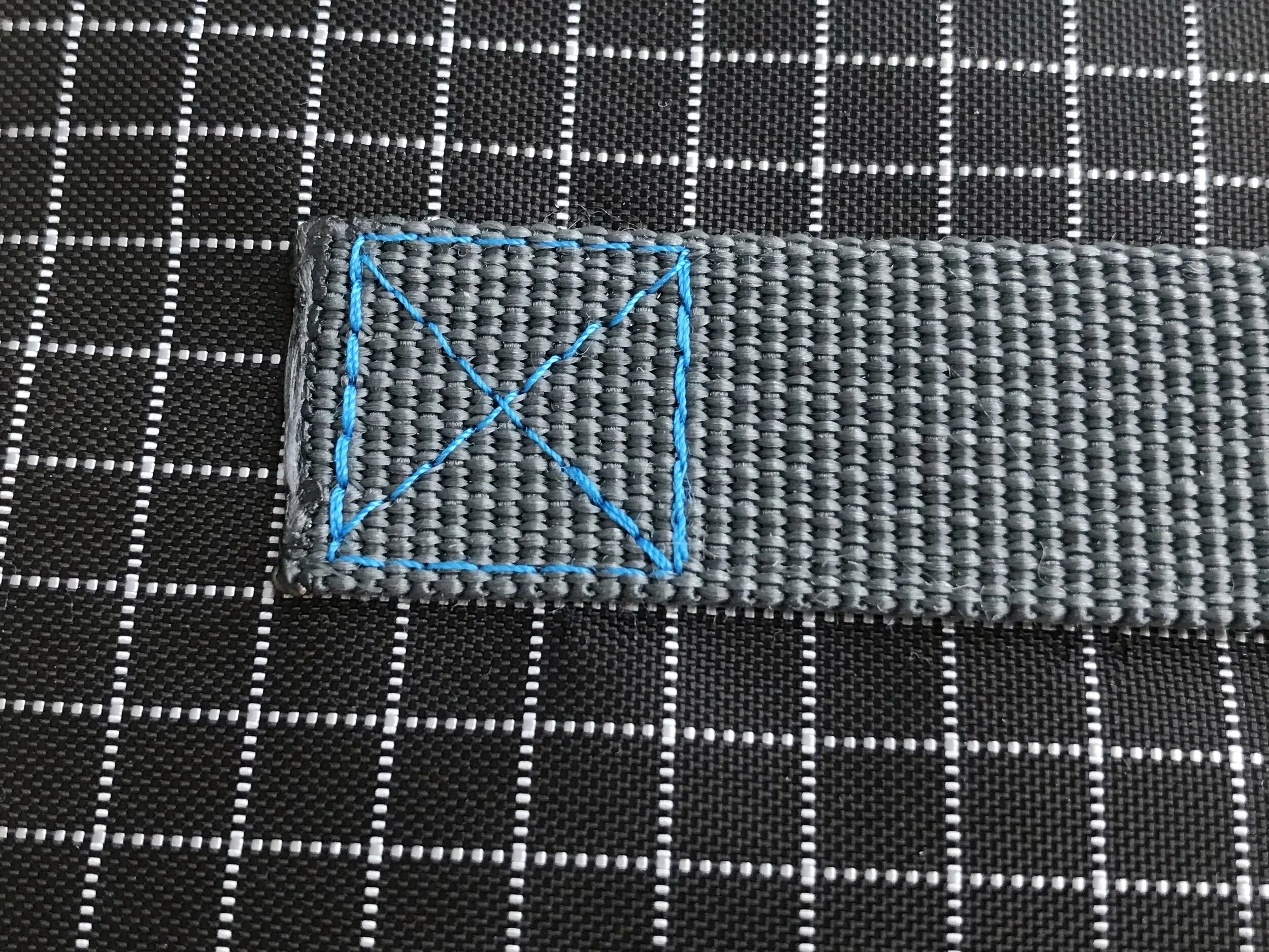
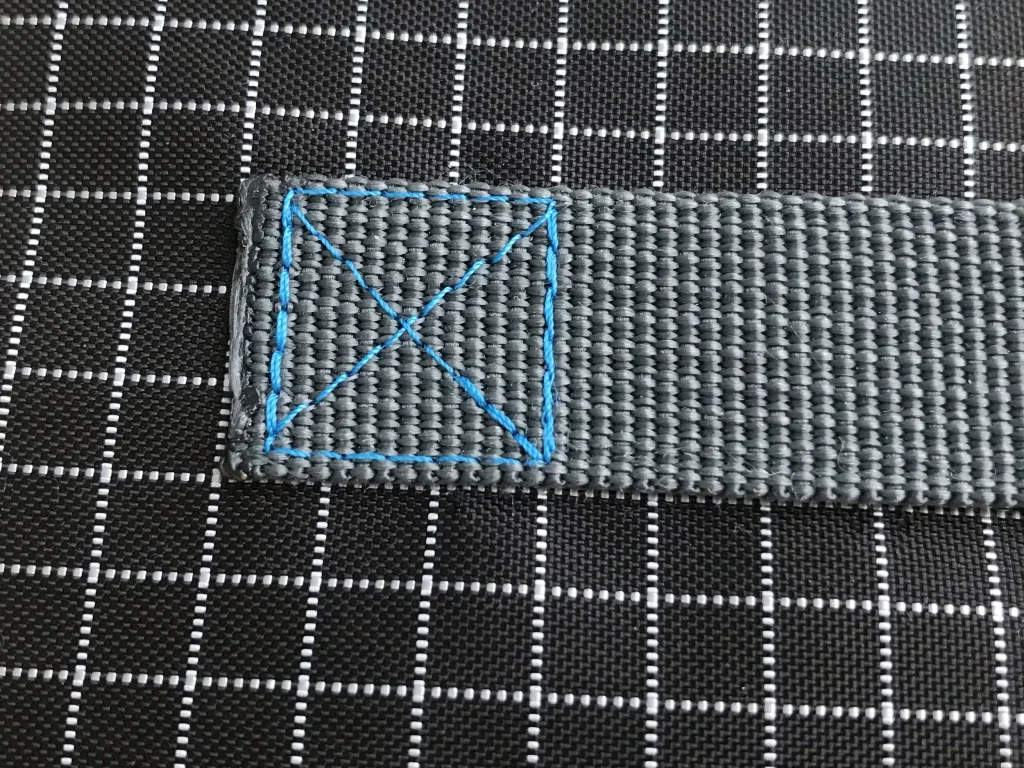
Look at where the shoulder straps meet the bag or where the grab handle is attached. You should see a square box with an ‘X’ sewn inside. This Box X stitch maximizes the surface area of the attachment, ensuring that heavy vertical loads don’t rip the strap out of the fabric.
Material Reinforcement: What Lies Beneath
Sometimes, the most critical reinforcement is completely invisible to the end-user.
Using Hypalon or PVC Patches at Stress Points
Behind the scenes, we often insert hidden patches of Hypalon (a synthetic rubber) or PVC inside the lining at high-stress points—like where a shoulder strap is sewn in. The stitching goes through the outer fabric, the reinforcement patch, and the lining, giving the thread something incredibly solid to grip onto.
Double-Layered Bottom Panels for Abrasion Resistance
The bottom of a backpack takes the most abuse. For heavy-duty bags, we often use a double layer of fabric at the base. Even if the outer layer wears through from being dragged on concrete, the inner layer keeps the contents secure.
Testing for Durability: Ensuring the Tech Works
We don’t just assume these techniques work; we verify them. Quality control in manufacturing means rigorous testing.
Load-Bearing Tests and Tensile Strength Verification
In our testing lab, we subject finished bags and individual components to destructive testing. We use machines to pull straps until they break, measuring the exact force required. This ensures our reinforcement techniques meet international safety and durability standards.
Our Factory’s Standard for “Heavy Duty”
To us, “heavy duty” isn’t a marketing buzzword; it’s a measurable standard. It means using the right thread, applying bartacks precisely, and reinforcing hidden stress points. It means building a product that your customers can trust with their gear, and their safety.
Quality is in the Details You Can’t Always See
Creating a durable backpack is an exercise in detail. It requires a manufacturing partner who understands the physics of load-bearing and refuses to cut corners on “invisible” processes like stitching density and internal reinforcement.
Are you looking to manufacture a product that can survive the toughest conditions? Discuss your durability requirements with our production experts and let’s engineer a product that lasts.
Frequently Asked Questions About Backpack Durability
Is a heavier fabric always more durable?
Is a heavier fabric always more durable? Generally, yes, a higher denier fabric (like 1000D) is more abrasion-resistant. However, seam strength is often the weak link. A heavy fabric with weak stitching will fail faster than a lighter fabric with superior reinforcement.
What is the strongest stitch for a backpack strap?
What is the strongest stitch for a backpack strap? The Box-X stitch combined with a Bartack is widely considered the gold standard for anchoring straps. This combination distributes force effectively and prevents the webbing from unraveling.
Can I request specific reinforcement methods for my order?
Can I request specific reinforcement methods? Absolutely. As an OEM partner, we encourage you to specify reinforcement details in your Tech Pack. If you aren’t sure what’s needed, our R&D team can analyze your design and recommend the best reinforcement techniques based on the intended load and usage. Get a technical consultation today.