The soul of a player’s performance lies at the sole of their feet. In soccer, the outsole of a cleat is the critical interface between the athlete and the pitch. Choosing the right soccer cleats with the correct stud pattern is not just about performance—it’s about safety. What are the different types of soccer cleats? This guide will dissect the anatomy of the modern football boot outsole, explaining the crucial differences between the main soccer cleat stud types: FG, AG, and SG. Understanding this is essential for any brand developing a serious footwear line. Build your professional football boot collection with us.
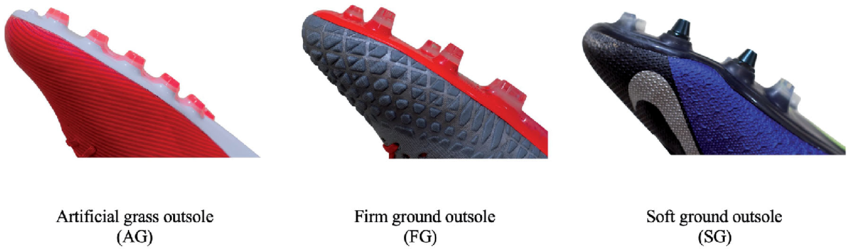
FG (Firm Ground): The All-Rounder for Natural Grass
The FG outsole is the most common and versatile type on the market, designed for play on natural, dry grass pitches.
What are FG Studs? (Blade and Conical Shapes)
Firm Ground (FG) studs are typically made of hard plastic or TPU. They come in two main shapes: bladed studs, which offer aggressive traction for quick cuts and acceleration, and conical (round) studs, which provide rotational freedom to reduce stress on the knees. Many modern designs use a hybrid of both.
The Ideal Playing Surface for Firm Ground Cleats
As the name suggests, these cleats are optimized for firm, natural grass. They provide the perfect balance of grip and stud pressure on a standard, well-maintained pitch.
Why You Shouldn’t Use FG Cleats on Artificial Grass
Using FG cleats on artificial grass is a common mistake. The longer studs can get caught in the synthetic fibers, increasing the risk of joint injuries. Furthermore, the hard studs can wear down quickly on the abrasive surface.
AG (Artificial Grass): Engineered for Modern Pitches
With the rise of 3G and 4G artificial pitches, a specialized outsole has become essential. What cleats are best for artificial grass? The answer is AG.
What Makes AG Studs Different? (Hollow Studs, Higher Stud Count)
Artificial Grass (AG) outsoles feature a higher number of shorter, conical studs. Crucially, these studs are often hollow studs. This design allows them to compress slightly upon impact, absorbing shock and distributing pressure more evenly across the foot.
The Benefits: Reduced Joint Strain and Better Grip
The AG configuration provides reliable grip on synthetic surfaces without the dangerous “sticking” effect of FG studs. The design significantly reduces joint strain on the ankles and knees, which is a major concern on artificial turf.
The Rise of the “FG/AG” Hybrid Outsole
Many brands now offer an FG/AG hybrid outsole. This attempts to create a versatile boot suitable for both firm ground and modern artificial pitches, featuring a mix of stud shapes and lengths.
SG (Soft Ground): Built for Wet and Muddy Conditions
SG outsoles are a specialist tool, designed for maximum traction on wet, muddy, and poorly maintained natural grass pitches.
The Anatomy of SG Studs: Removable and Metal-Tipped
Soft Ground (SG) studs are longer and fewer in number. They are typically removable studs with metal-tipped ends. This allows them to penetrate deep into the soft ground to prevent slipping. Players can also customize the stud length based on pitch conditions.
When and Where to Use Soft Ground Football Boots
These football boots should only be used on genuinely soft, wet, or muddy pitches. They are common in professional leagues where pitch conditions can be challenging, especially during winter months.
The Risks of Using SG Studs on Hard Surfaces
Using SG cleats on firm ground or artificial grass is extremely dangerous. The long, metal studs create excessive pressure points on the foot and can lead to serious injury.
At a Glance: FG vs. AG vs. SG Comparison Chart
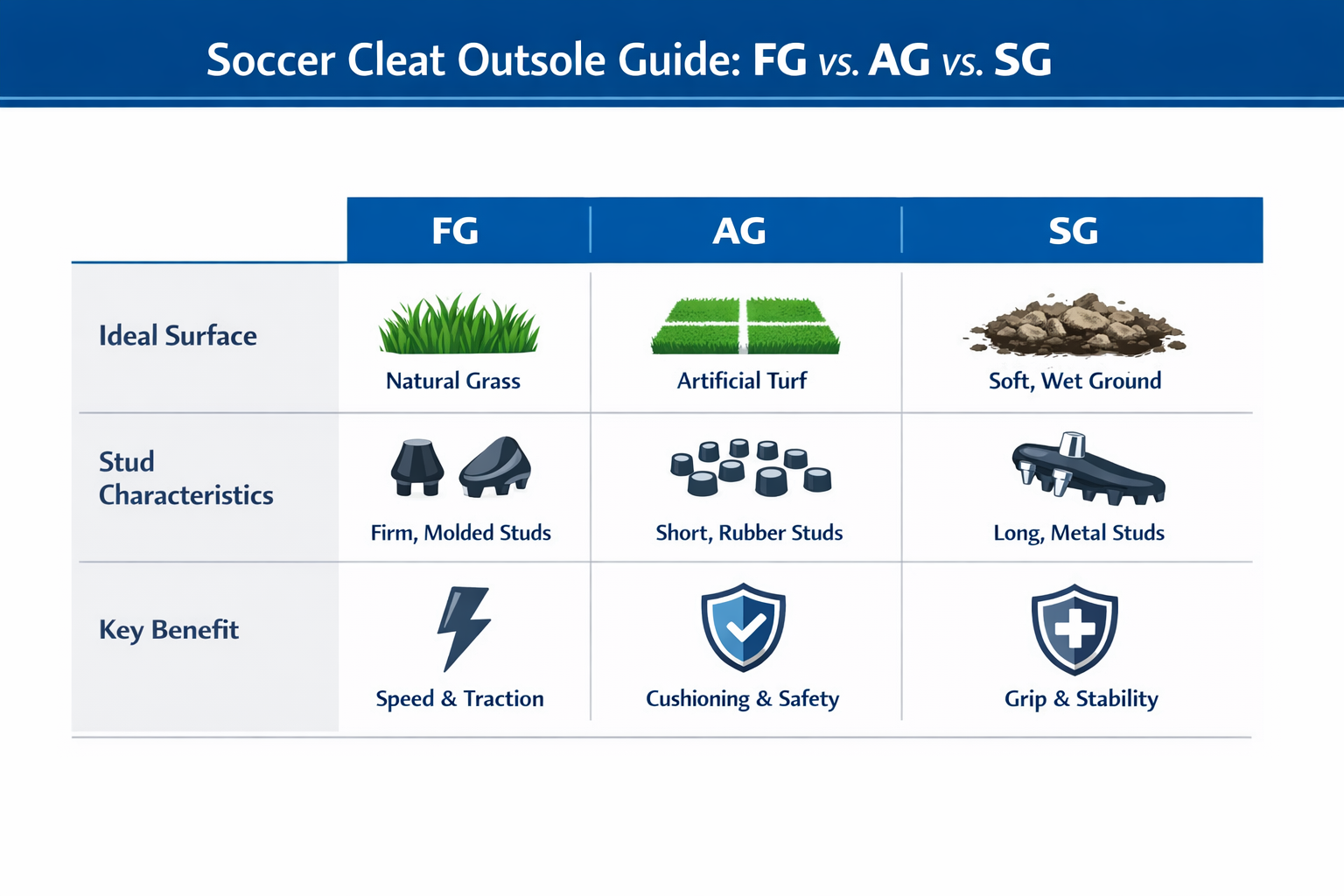
To simplify the choice, here’s a direct comparison of the three main stud types.
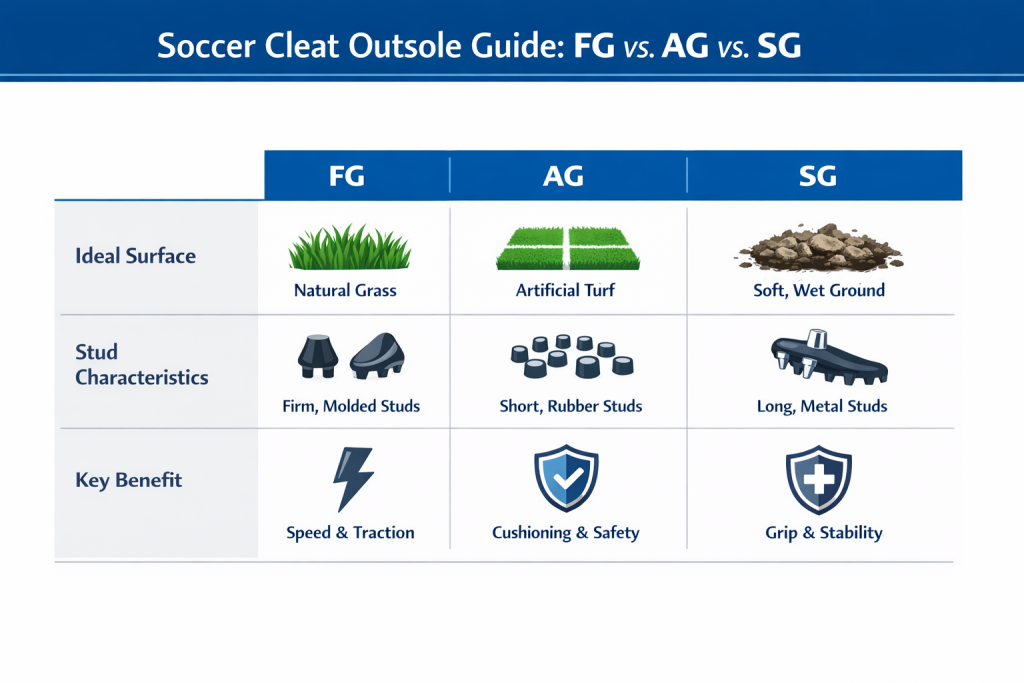
Chart Comparing: Surface, Stud Shape, Stud Material, and Key Benefit
| Feature | FG (Firm Ground) | AG (Artificial Grass) | SG (Soft Ground) |
|---|---|---|---|
| Ideal Surface | Natural, dry grass | Modern artificial grass | Wet, muddy natural grass |
| Stud Shape | Bladed / Conical | Shorter, hollow conical | Longer, conical |
| Stud Material | Plastic / TPU | Plastic / TPU | Metal-Tipped (Removable) |
| Key Benefit | Versatility & Speed | Safety & Pressure Distribution | Maximum Traction |
Choosing the Right Outsole for Your Custom Football Boots
For a successful footwear brand, understanding these nuances is key to serving your market effectively.
Why Offering Multiple Outsole Options is a Smart Strategy
Players compete on different surfaces. A brand that offers its flagship model with FG, AG, and SG outsole options demonstrates a deep understanding of the game and caters to the real needs of serious athletes.
How We Help Brands Develop Technically Sound Soccer Cleats
At BMLineColl.com, we have the technical expertise to develop and manufacture a full range of outsole configurations. We can help your brand create a technically sound and comprehensive collection of soccer cleats for every type of player and pitch.
The Right Foundation for Every Match
The outsole of a soccer cleat is the foundation upon which performance is built. Choosing the correct stud type for the playing surface is the most important equipment decision a player can make. By offering technically precise options, your brand can provide the right foundation for every match.
Ready to build a professional football boot range that covers all playing surfaces? Contact our footwear technology experts to lay the foundation for victory.
Frequently Asked Questions About Soccer Cleat Studs
Can I use AG cleats on firm ground (natural grass)?
Can I use AG cleats on firm ground (natural grass)? Yes, in most cases, using AG cleats on a firm grass pitch is safe, though you might experience slightly less aggressive traction compared to a true FG outsole. However, the reverse (using FG on AG) is not recommended.
What are “turf” (TF) shoes, and how are they different?
What are “turf” (TF) shoes? Turf shoes have a rubber outsole covered in many small, nub-like studs. They are designed for older, carpet-like artificial turf surfaces and are also excellent for training and casual play. They are different from AG cleats, which are for modern, grass-like artificial pitches.
How do I know when to replace the studs on my SG boots?
How do I know when to replace the studs on my SG boots? You should replace your removable SG studs when the metal tips become significantly worn down or rounded, as this will reduce their ability to penetrate soft ground and provide traction. Always check them for wear before a match on a wet pitch. To discuss options for your brand, contact our team.