The upper is the face of your sneaker; it defines its character, communicates its value, and dictates its first impression. The choice of fashion sneaker materials is one of the most critical decisions in the design process. What is the best material for sneaker uppers? The answer depends entirely on your brand’s identity, target audience, and price point. This guide will compare three of the most popular choices: genuine leather, PU leather, and suede. Let’s dive into the great debate of leather vs PU vs suede.
Genuine Leather: The Premium Standard of Durability and Prestige
Genuine leather is the traditional, benchmark material for high-quality footwear, synonymous with luxury and longevity.
The Look and Feel: Natural Grain and Breathability
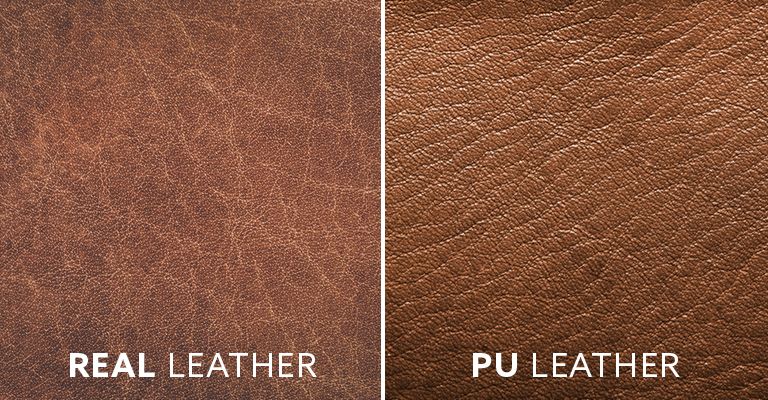
Real leather has a unique, natural grain that cannot be perfectly replicated. It’s known for its excellent breathability, which allows it to conform to the wearer’s foot over time, creating a custom fit. Its look is classic and signals a premium product.
Pros: Unmatched Durability, Ages Gracefully
The biggest advantage of leather is its superior durability. When properly cared for, a leather sneaker can last for years. It also develops a unique patina as it ages, adding to its character.
Cons: Higher Cost, Heavier, Requires More Care
This premium quality comes at a price. Leather is the most expensive of the three materials. It’s also heavier than its synthetic counterparts and requires regular cleaning and conditioning to maintain its appearance.
PU Leather: The Versatile and Cost-Effective Alternative
PU leather has become a dominant material in the fashion sneaker world, offering incredible versatility.
What is PU (Polyurethane) Leather?
PU leather is a synthetic material created by applying a polyurethane coating to a fabric base. Advances in technology have made it difficult for the untrained eye to distinguish high-quality PU from real leather.
Pros: Wide Range of Finishes, Easy to Clean, Vegan-Friendly
PU can be made in any color, texture, or finish imaginable (e.g., patent, metallic). It’s easy to wipe clean and, importantly, it is a vegan-friendly material, which is a massive selling point for a growing market segment.
Cons: Less Breathable, Can Peel or Crack Over Time
The main drawback of PU is its lack of breathability compared to genuine leather. Lower-quality PU can also be prone to peeling or cracking over time, especially at flex points.
Suede Shoes: The Soft Touch of Casual Luxury
Suede shoes offer a unique aesthetic that sits between the ruggedness of leather and the uniformity of PU.
Understanding Suede: A Different Kind of Leather
Suede is a type of leather made from the underside of the animal skin, giving it a soft, napped finish. It’s known for its velvety texture and luxurious feel.
Pros: Unique Texture, Flexible Comfort
The standout feature of suede is its unique texture, which provides a soft, matte look that is perfect for casual and lifestyle sneakers. It’s also very flexible and comfortable right out of the box.
Cons: Difficult to Clean, Susceptible to Water Damage
Is suede durable for shoes? While flexible, it is not as tough as full-grain leather. Suede’s biggest weakness is its vulnerability to water and stains. It is notoriously difficult to clean and requires special care, making it less suitable for all-weather wear.
At a Glance: Leather vs. PU vs. Suede Comparison Chart
To help you decide, here’s a simple chart breaking down the key differences.
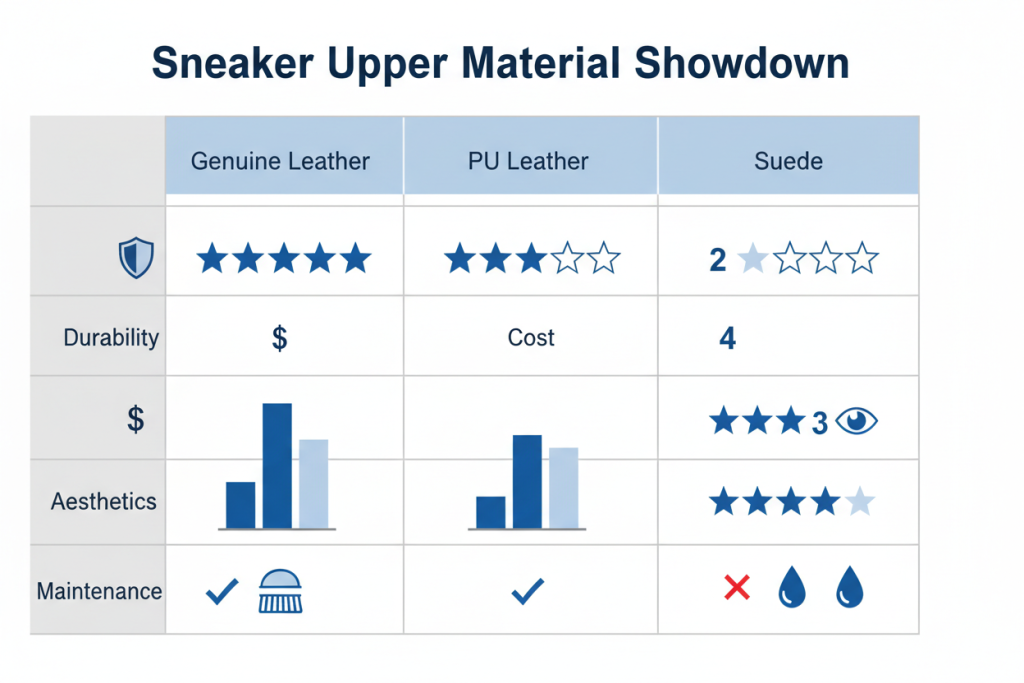
Chart Comparing: Durability, Cost, Aesthetics, and Maintenance
| Feature | Genuine Leather | PU Leather | Suede |
|---|---|---|---|
| Durability | Excellent | Good | Fair |
| Cost | High | Low to Medium | Medium |
| Aesthetics | Premium, Natural | Versatile, Uniform | Soft, Luxurious |
| Maintenance | Requires Care | Very Easy | Difficult |
| Best For | Luxury, Heritage | Fast-Fashion, Vegan | Lifestyle, Casual |
Making the Right Choice for Your Fashion Sneaker Materials
The best material is the one that aligns with your brand strategy.
For a Luxury Brand: Prioritize Genuine Leather
If you are building a luxury brand focused on craftsmanship and longevity, genuine leather is the undisputed choice. Its premium feel and durability justify a higher price point.
For a Fast-Fashion or Vegan Brand: Leverage PU Leather
If your brand focuses on current trends, a wide variety of styles, or caters to the vegan market, PU leather is your best friend. Its versatility and cost-effectiveness allow for rapid product development.
For a Lifestyle or Heritage Brand: Embrace Suede
If your brand has a relaxed, lifestyle, or retro aesthetic, the unique texture and comfort of suede shoes can be a powerful signature element.
Your Upper Material Defines Your Brand’s First Impression
The material of your sneaker upper is more than a technical specification; it’s a message to your customer. It communicates your brand’s values, quality, and style. Choosing wisely is the first step in creating a product that resonates with your target audience and stands the test of time.
Whether your brand is positioned as luxury, fast-fashion, or lifestyle, we have the material solutions to match. Discuss your design with our material experts and let’s create a sneaker with the perfect look and feel.
Frequently Asked Questions About Sneaker Uppers
Is PU leather the same as faux leather?
Is PU leather the same as faux leather? “Faux leather” is a general term for any artificial leather. PU leather is a specific type of faux leather. It is generally considered higher quality and more realistic than its older counterpart, PVC (vinyl).
How can I tell the difference between real leather and PU leather?
How can I tell the difference between real leather and PU? Real leather has an imperfect, natural grain pattern, a distinct smell, and feels flexible yet strong. PU leather often has a more uniform, plastic-like smell and a repeating surface pattern.
Which material is the most environmentally friendly?
Which material is the most environmentally friendly? This is a complex question. Traditional leather tanning can be resource-intensive. However, many modern tanneries use eco-friendly processes. PU leather is vegan, but it is a plastic derived from fossil fuels. There are also newer options like recycled PU and plant-based leathers. The “best” choice depends on your brand’s specific sustainability goals. For a deeper discussion on material options, contact our team.